Cute Rabbit Letter Y: Whimsy That Stitches Well
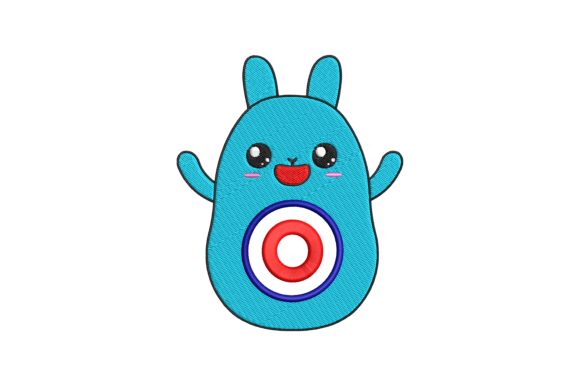
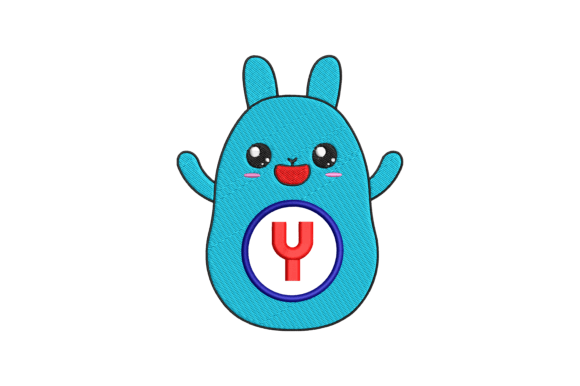
As a designer who’s stitched hundreds of embroidery files for clients—from boutique baby lines to Etsy sellers launching holiday collections—I opened Cute Rabbit Letter Y expecting charm. What I got was something more useful: a design with quiet confidence in its simplicity. It’s not flashy, but it’s thoughtful. The rabbit isn’t just tacked onto the letter Y—it’s woven into it. Ears curve from the upper arms; the tail nestles neatly at the base. It feels like a single idea, not a collage.
I tested it on a linen-cotton tea towel first—my go-to for real-world validation. The stitch density held up beautifully: no puckering, no skipped satin stitches along the ear contours, and the fill stitch in the rabbit’s body stayed smooth without oversaturation. That tells me this machine embroidery design was digitized with fabric behavior in mind—not just screen appeal. It’s exactly the kind of detail that separates a “nice-looking preview” from a reliable embroidery file you’d confidently use in a client’s custom tote bag or nursery pillow cover.
Where Cute Rabbit Letter Y Feels Like Home
This isn’t a one-size-fits-all motif. Its personality leans soft, gentle, and quietly intentional—ideal for projects where warmth matters more than wow. Think: a hand-stitched-look sweatshirt for a kindergarten teacher’s first-day gift, or an embroidered patch sewn onto a child’s backpack for Back To School. I used it on a lightweight cotton apron for a local bakery’s staff—paired with a simple monogram—and customers kept asking, “Where did you get that little rabbit?” That’s the sweet spot: recognizable, memorable, but never cloying.
It shines brightest on medium-weight, stable fabrics: tea towels, pillow covers, baby onesies, denim jackets, and structured tote bags. On those surfaces, the rabbit’s rounded forms read clearly, and the Y’s vertical line gives just enough structure to balance the whimsy. As a personalized gift, it adds character without overwhelming—especially when paired with neutral thread colors (soft grey, oatmeal, or dusty rose) against natural linen or off-white cotton.
Where to Pause—and Test First
Don’t assume it’ll behave the same on every surface. On thin or highly stretchy fabric—like jersey knit tees or lightweight rayon blouses—the delicate curves of the ears and tail can distort if stabilizer isn’t layered precisely. I recommend a light cutaway + tear-away combo for anything with give. And on dark fabric? Run a quick test with lighter thread: the inner details (like the subtle eye line or ear shading) rely on contrast, not just stitch count.
Curved surfaces—caps, curved brims, or tapered pillow corners—require extra attention. The Y’s shape doesn’t wrap easily. If you’re planning a cap front, consider repositioning the design lower or pairing it with a simple border to anchor it visually. Also, avoid cramming it into hoops smaller than 4x4 inches unless you’ve verified the file includes a reduced version. Some versions of Cute Rabbit Letter Y are optimized for standard hoops—but always check before hooping your final piece.
What It Does for Your Craft Business
For Etsy sellers and small shop owners, this design quietly lifts perceived value. It’s not generic clip art—it reads as curated, intentional, and handmade. When customers see it on a kitchen towel or baby blanket, they don’t think “mass-produced.” They think “someone chose this *just right*.” That builds trust, especially in niches like nursery decor or teacher appreciation gifts.
It also works hard across formats. As a standalone embroidered patch, it’s distinctive enough to stand alone on a denim jacket. As part of a larger tote bag design, it anchors a playful theme without competing. And for digital product sellers, it’s a strong candidate for a themed bundle—say, “Back To School Animal Letters”—because it’s cohesive, scalable, and commercially versatile.
Designer Notes You’ll Actually Use
- Always test on scrap fabric first—especially if using textured weaves (like waffle weave towels) where stitch definition can blur.
- Check thread color contrast before stitching on dark or busy prints. A pale mint thread may disappear on charcoal linen; try a slightly deeper sage instead.
- Review stitch density in your editing software. If you see dense fill areas near the rabbit’s face, consider reducing density by 5–10% for breathable fabrics like baby knits.
- Confirm hoop size compatibility before sending to production. If your machine defaults to 5x7 but the design fits cleanly in 4x4, you’ll save time and stabilizer.
- Inspect small details at 200% zoom: the eye, ear tips, and Y’s crossbar junction. These are where digitizing shortcuts show up—and Cute Rabbit Letter Y holds up well here.
- Test black-and-white mockups before listing online. This design relies on shape and rhythm—not color—so it must read clearly in grayscale thumbnails.
- Verify licensing terms before selling finished items or bundling as design assets. Since it’s marketed for home decor and personal use, confirm whether commercial resale of stitched products is permitted.
In short: Cute Rabbit Letter Y earns its place in your working library—not because it’s trendy, but because it’s reliable. It delivers consistent results across custom apparel, baby embroidery, holiday embroidery, and small-batch merchandise. It invites playfulness without sacrificing polish. And for a craft business or solo maker, that balance—between charm and competence—is everything.
If you’re building a collection of digital embroidery files that sell well, age gracefully, and reflect thoughtful design judgment, Cute Rabbit Letter Y belongs in the stack. Just remember: even the cutest rabbit needs the right stabilizer, the right thread, and your own practiced eye before it becomes someone’s favorite handmade product.