1ST Rule Grade: A Seasonal Embroidery Review
First Impressions: Warm, Nostalgic, and Thoughtfully Refined
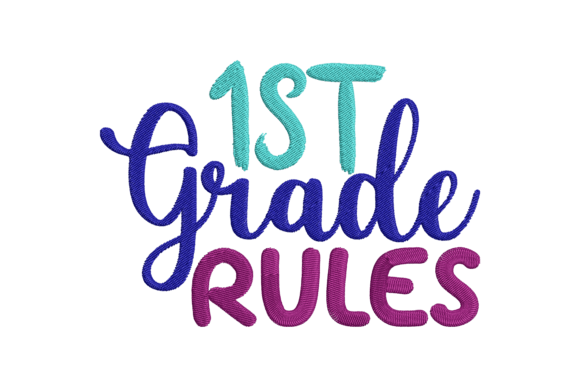
As an embroidery designer who’s built seasonal collections for over a decade—from back-to-school launches to holiday gift drops—I opened 1ST Rule Grade expecting something functional. Instead, I felt immediate warmth. It carries a gentle, nostalgic charm—like chalkboard lettering softened by time, with subtle flourishes that whisper “elegance” without shouting. It’s not overly ornate, but it’s never flat. The line work balances crispness and flow; the spacing feels intentional, not rushed. This isn’t just a machine embroidery design—it’s a mood-setter. For Back To School, it evokes quiet confidence and fresh starts. For holidays? It shifts effortlessly: cozy on a knit pillow cover, refined on a linen table runner, quietly spiritual on a baby blanket or embroidered patch meant for a keepsake ornament.
Real-World Holiday & Seasonal Use Cases
1ST Rule Grade thrives where emotion meets utility. On sweatshirt embroidery for family matching sets? It reads clearly at 3.5–4 inches wide—ideal for chest placement and Instagram-ready product mockups. As a tote bag design for teacher appreciation bundles? It holds up beautifully at medium scale, especially when paired with a complementary monogram or tiny star motif. For kitchen towel embroidery or pillow covers, its balanced proportions prevent visual heaviness—no crowding, no emptiness. And as a centerpiece for handmade gift kits (think: apron + tea towel + embroidered patch set), 1ST Rule Grade becomes the unifying thread—literally and aesthetically.
Etsy sellers will appreciate how well it performs in search: “back to school embroidery,” “holiday monogram,” “teacher gift embroidery”—all align naturally. Its clean, legible style translates powerfully in printable mockups and social media previews, helping small shop products stand out amid algorithm noise. When used across coordinated items—like matching napkins and oven mitts—it builds brand consistency without needing logos or slogans. Customers recognize the tone: thoughtful, warm, trustworthy.
Where to Apply Careful Embroidery Judgment
This design shines—but like any quality embroidery file, it rewards intentionality. Avoid cramming 1ST Rule Grade into tiny hoop sizes (<4" diameter) unless you’ve tested stitch density first. Fine details—especially in serif-style letterforms—can blur on thick towels or textured terry cloth without proper stabilizer. On dark fabric, test thread colors thoroughly: light ecru or oatmeal may disappear; charcoal gray or navy thread often adds depth while preserving readability. Metallic thread? Beautiful in theory—but only if your machine handles it reliably and your customer expects delicate care instructions.
Stretchy garments (like ribbed knits or lightweight jersey) demand cutaway stabilizer and slower stitching speeds—1ST Rule Grade’s clean lines won’t forgive puckering. Curved caps or tight seams? Reconsider placement: it works best on flat, stable surfaces. And for items meant for repeated washing (baby onesies, kids’ backpacks), confirm the file’s stitch density supports durability—overly dense fills can stiffen fabric or crack over time.
Design Notes Every Seasonal Embroiderer Should Follow
- Test thread colors on both light and dark fabric before batch production—what looks elegant on white may vanish on charcoal.
- Check stitch density in your embroidery software: aim for balanced coverage—not too sparse (loses impact), not too dense (risks stiffness or thread breakage).
- Confirm hoop size compatibility with your most-used machines—and verify if the digital embroidery file includes multiple sizes or only one.
- Use appropriate stabilizer: tear-away for stable wovens, cutaway for knits or towels, and water-soluble for delicate lace overlays.
- Create realistic mockups—not just flat PNGs, but curved, draped, and lifestyle shots—to preview how 1ST Rule Grade lives on real products.
- Review small details after stitching: kerning, terminal strokes, and subtle curves should remain crisp—not fused or frayed.
- Plan matching color palettes in advance: choose 3–4 thread colors that harmonize across your entire holiday collection.
- Confirm commercial licensing before selling finished products—this is non-negotiable for Etsy sellers, craft fair vendors, and wholesale partners.
Why 1ST Rule Grade Strengthens Your Seasonal Strategy
In high-intent holiday shopping windows, buyers don’t just buy products—they buy feeling. 1ST Rule Grade delivers emotional resonance: calm confidence for back-to-school shoppers, quiet reverence for holiday gifting, timeless charm for handmade gift buyers. That translates directly to perceived value. A personalized gift with this embroidery doesn’t feel mass-produced—it feels chosen, considered, cared-for. That builds customer trust faster than any discount code.
Visually, it’s instantly recognizable yet endlessly adaptable—making it ideal for cohesive seasonal branding. Whether stitched on a linen pillow cover or a cotton apron, it signals quality and attention. And because it avoids trend-driven gimmicks, it stays relevant across multiple seasons—not just one holiday drop. For small business owners juggling inventory, time, and creative bandwidth, that longevity is gold.
Final Thought: A Design That Earns Its Place
1ST Rule Grade isn’t flashy—but it’s memorable. It doesn’t shout; it invites. In a market flooded with seasonal embroidery, it stands out by being deeply human: warm, precise, and quietly confident. If you’re curating a holiday collection, launching a back-to-school line, or building a signature look for your handmade gift brand, this embroidery file earns its spot—not as filler, but as foundation. Just remember: test, stabilize, and trust your instincts. Because the best seasonal embroidery doesn’t just decorate fabric—it deepens connection.